LANARS
iOS and Android apps (native, then rewritten in Flutter), Node.js and Python backend, AQ score integration, seven wearable integrations, Stripe billing and the B2B HR portal.

Case study · LANARS × MiaHealth
Since 2018, LANARS has been MiaHealth's engineering partner — from the original Memento U startup in Trondheim to today's Flutter app used by 100,000+ Norwegians. The product turns a research-grade activity metric from NTNU's CERG lab into a daily habit, and integrates with seven wearable brands. Design is owned in-house by MiaHealth; we build everything else.
At a glance
Context
NTNU's CERG lab in Trondheim had spent decades producing some of the world's most rigorous cardiovascular research — the HUNT study, the Fitness Age algorithm, 15+ peer-reviewed papers. The science existed. The habit infrastructure did not. Most people who could benefit from this research never encountered it.
MiaHealth was founded in Trondheim in December 2016 to close that gap. The first version, Memento U, was a trainer-booking marketplace. LANARS joined as engineering partner in 2018. Over the following years the product pivoted from marketplace to population-health tracker — a single app that takes heart-rate data from whatever wearable a user already owns and returns a number they can act on.
In September 2024, the product's core metric evolved from PAI to AQ — the Activity Quotient — recalibrated against a dataset of over one million global participants. The company was renamed Mia Health AS, and the product shipped its first Flutter-native release to the Norwegian App Store.
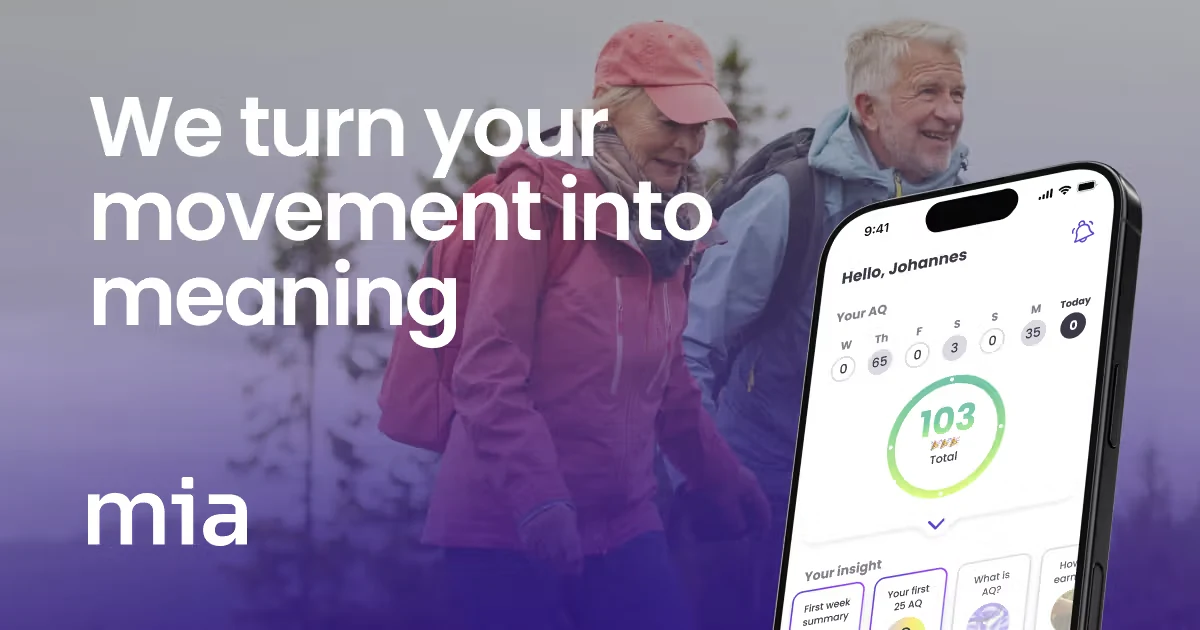
Two teams, one product. LANARS built the apps and the backend. The MiaHealth team owned design, the landing page, product direction and the ideas that drove the roadmap.
LANARS
iOS and Android apps (native, then rewritten in Flutter), Node.js and Python backend, AQ score integration, seven wearable integrations, Stripe billing and the B2B HR portal.
MiaHealth in-house
Visual and UX design, the marketing site, product direction and the ideas behind each release — plus the NTNU research partnership and B2B sales.
The science
The HUNT study — Trøndelag Health Study — followed 230,617 individuals from 1984 to 2019, making it one of the most comprehensive population-health datasets ever assembled. From HUNT3 (2007–2008), researchers at NTNU's CERG lab, led by Professor Ulrik Wisløff, derived the Fitness Age algorithm: a VO₂ max-based estimate of biological cardiovascular age. The same lab produces the AQ metric — the Activity Quotient — that sits at the heart of every Mia user's daily score.
That body of work spans 15+ peer-reviewed papers in journals including The Lancet Public Health and the European Heart Journal. In September 2024 the metric was updated to AQ, drawing on continuous heart-rate data from over one million participants globally. When a Mia user closes their AQ ring, they are acting on research that has been reviewed, replicated and published over four decades.
How it works
Raw heart-rate data flows from a wearable into the app, passes through the NTNU-derived AQ engine, surfaces as a single daily score, and is delivered through a coaching loop designed to build exercise into a lasting routine.
Sensor
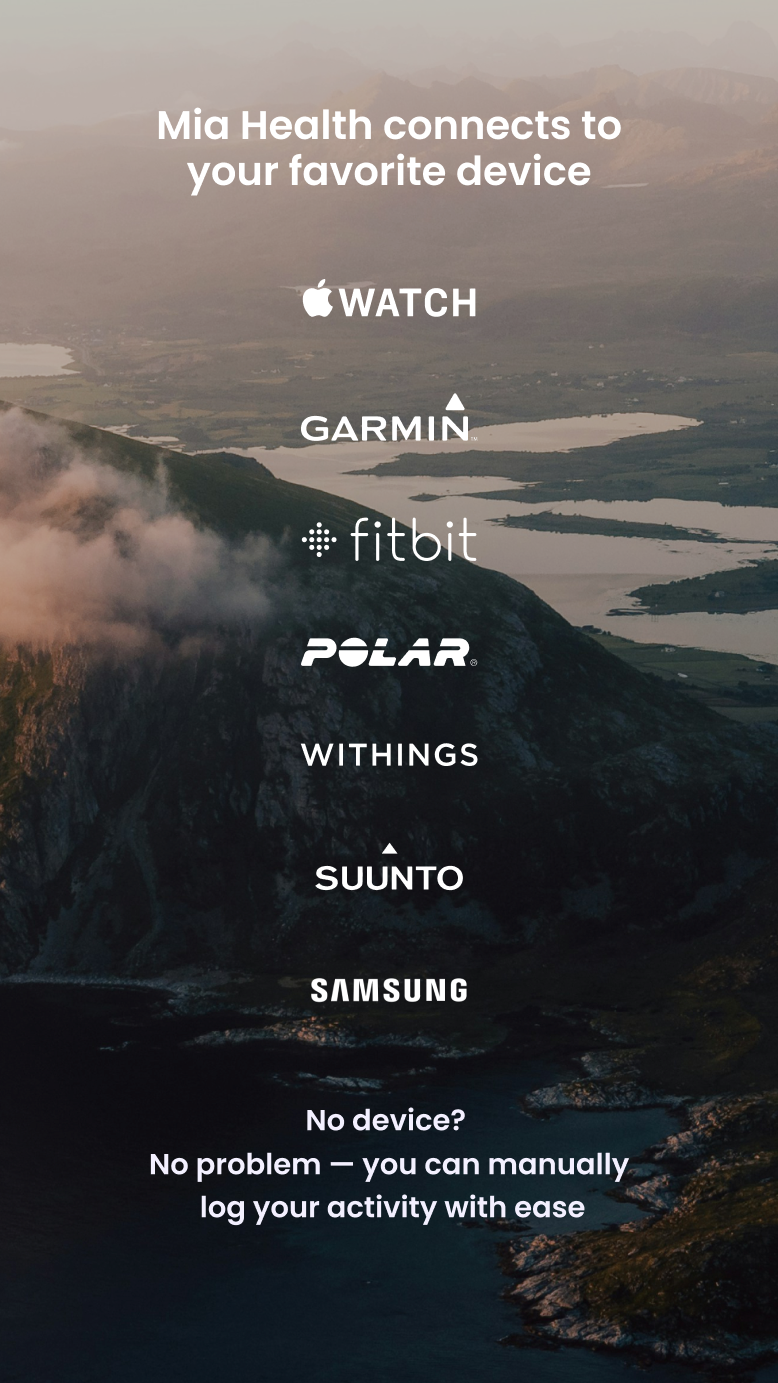
Apple Watch, Garmin, Polar, Fitbit, Samsung, Withings or Suunto streams heart-rate data continuously. HealthKit bridges any iOS-compatible device not natively supported.
Engine
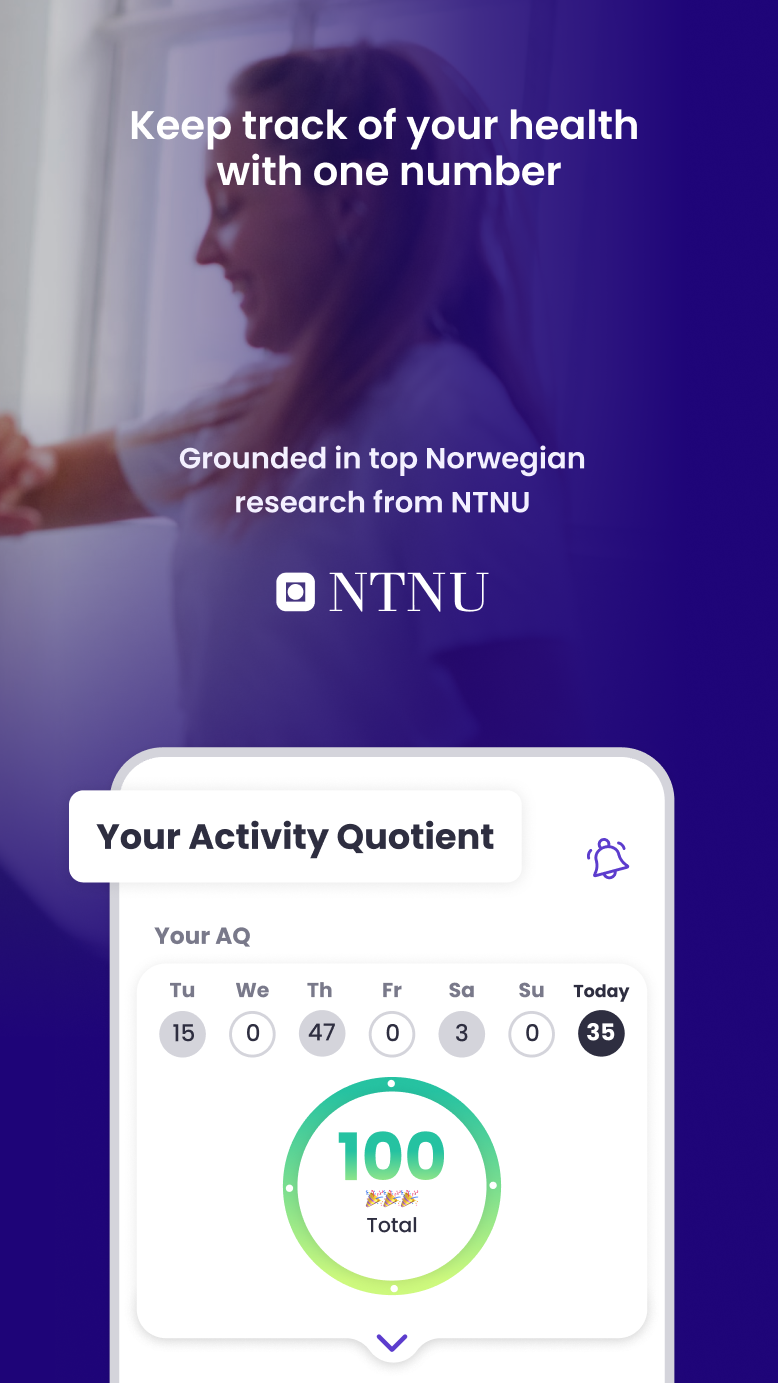
The AQ algorithm — NTNU CERG / Prof. Wisløff — processes 7 days of rolling heart-rate data and returns a single Activity Quotient score. Calibrated on 1M+ participants.
Insight
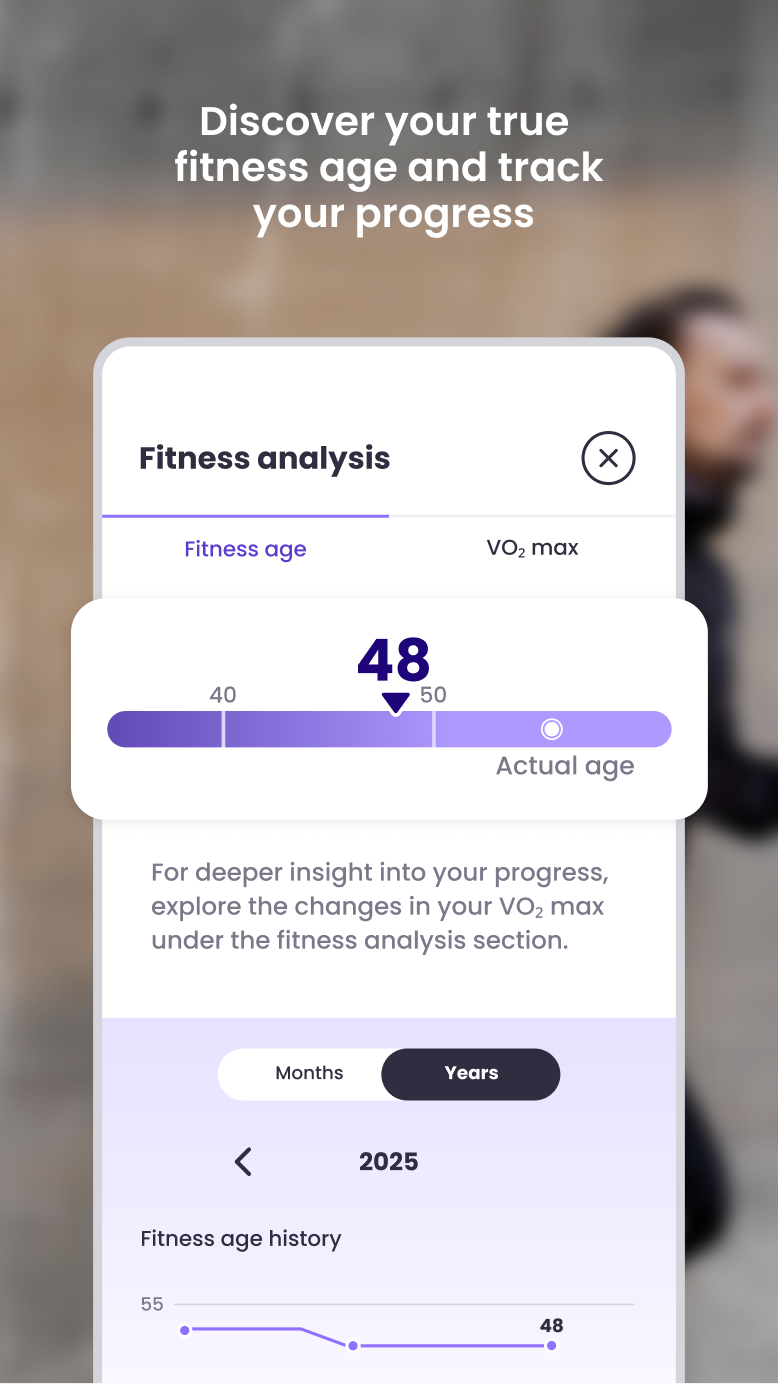
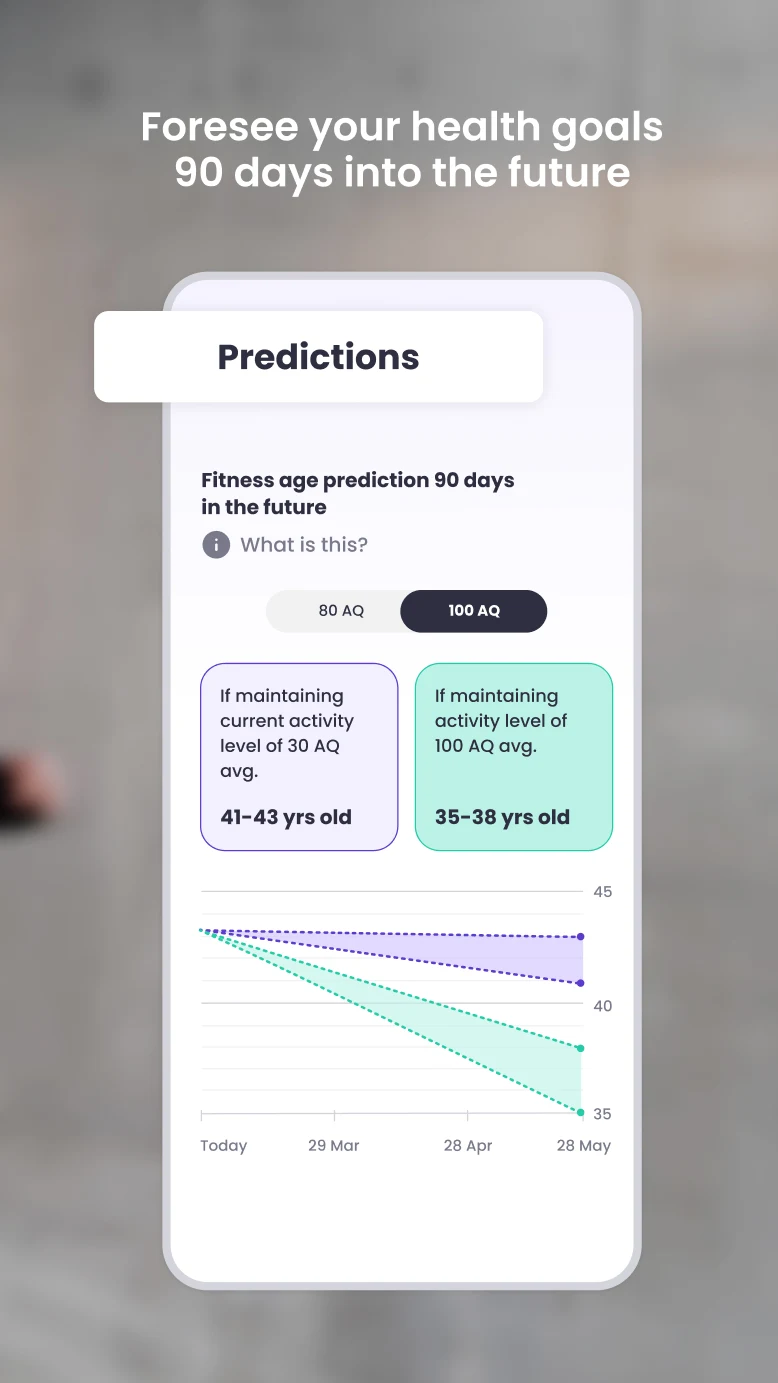
Fitness Age, 90-day predictions and a personalised 16-week programme give the user a clear picture of where they stand and exactly what to do next.
Habit
Push notifications, weekly summaries and the Kreftforeningen donation integration keep users engaged beyond the novelty phase. B2B clients track aggregate team health through the HR portal.
Inside the platform
In 2023–2024 LANARS rewrote the app from two native codebases (Swift + Kotlin) into a single Flutter codebase. Same UI on both stores, faster feature releases, and the foundation for the AQ migration.
Production app: no.miahealth.mia · LANARS is an official Flutter agency partner
LANARS integrated the PAI metric (2018–2024) and led the backend migration to AQ in September 2024 — including reprocessing historical data and updating the scoring pipeline.
AQ recalibrated on 1M+ global participants
Native integrations with Apple Watch (HealthKit), Garmin, Polar, Fitbit, Samsung Galaxy Watch, Withings and Suunto. The HealthKit bridge extends support to any iOS-compatible device.
Plus Apple HealthKit bridge for indirect device support
Workout routes and geo-tagged exercise sessions are stored and queried in PostGIS. The B2B HR portal can surface regional activity heatmaps for corporate clients.
Node.js + Python backend · PostgreSQL + PostGIS
Individual and corporate subscription billing through Stripe, with webhook-driven access control on both the mobile app and the B2B HR portal.
Supports both consumer and enterprise billing models
The Mia for bedrifter dashboard gives HR managers aggregate AQ trends, participation rates and fitness age distribution across their workforce — without exposing individual health data.
Named customer: SpareBank 1 SMN (~2,000 employees, Jan 2024)
⌘Built by LANARS · Official Flutter agency partner
LANARS is an official Flutter agency partner. In 2023–2024 we rewrote the entire MiaHealth product from separate Swift and Kotlin codebases into a single Flutter app — one codebase, identical experience on iOS and Android, and the solid foundation that allowed the AQ metric migration to ship on schedule.
Universal device support
MiaHealth reads real heart-rate data from the devices your users already own — no new hardware required.
Plus Apple HealthKit bridge for any iOS-compatible device.
Norway watched
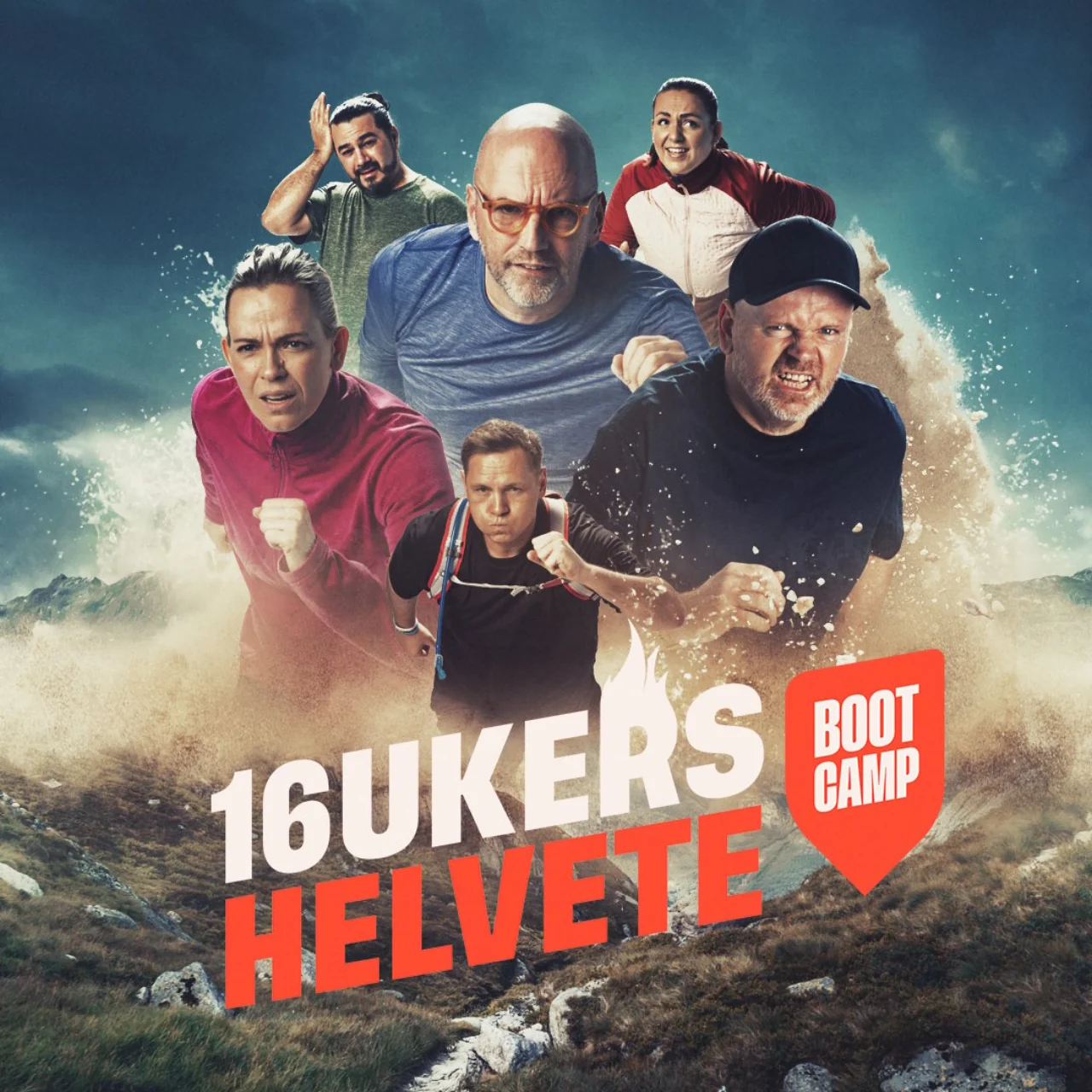
Sixteen Ukers Helvete is a prime-time transformation programme on TVNorge: six Norwegian celebrities commit to a 16-week fitness challenge broadcast across the country. MiaHealth has been the official sponsor since season one launched in January 2022 — providing the metric framework that participants use to track progress on-screen.
The partnership has been a major growth driver. Monday-night broadcasts triggered server-capacity spikes severe enough to prompt public comment from the marketing team. In summer 2025 alone, the show contributed to a single-season surge of 25,000+ new users — evidence that the science-backed framing resonates far beyond the early-adopter audience.
Workplace health
Mia for bedrifter pairs the consumer app with an HR web portal, giving employers AQ-based dashboards, participation rates and fitness age distribution across their workforce — without surfacing individual health data. The stated goal: reduce sykefravær and build an active company culture grounded in real science rather than wellness-programme theatre.
In January 2024, SpareBank 1 SMN rolled Mia Health out to approximately 2,000 employees as part of their internal Hjertebank concept. The average fitness age at launch was 42. Within months it had dropped below 40 — a measurable population-level shift in cardiovascular health, delivered through an app.
Measured, not promised
From the founder
"The world doesn't really need more fitness apps — there are thousands of them. It's about knowing how to exercise to take care of your health, not to be the best."
Tech stack
We do Flutter apps, Node.js and Python backends, wearable integrations, and the B2B dashboards that tie it all together. Tell us what you're building and we'll come back within a business day.



